

The Role of Geotextile in Malaysia’s Retaining Wall and Gabion Wall Systems
 admin on
 In Malaysia, managing challenging tropical terrain and heavy rainfall is key to infrastructure integrity. The geotextile has become an indispensable material, offering multifunctional performance essential for enhancing soil stability, providing long-term erosion control, and ensuring the longevity of structures like the retaining wall and gabion wall.
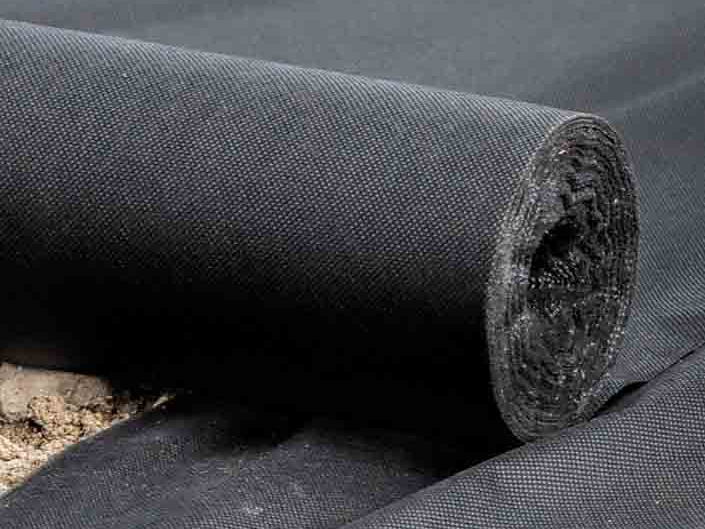
Understanding the Geotextile Fabric and Its Core Functions
A geotextile is a permeable geotextile fabric made from synthetic polymers. Its versatility allows it to perform several critical functions within a soil system. Firstly, it provides separation, preventing dissimilar soil layers from intermixing and preserving the design integrity. Secondly, it offers filtration, allowing water to pass through while retaining fine soil particles, which prevents clogging within drainage layers.
This capacity leads directly to drainage, providing an engineered pathway for water to be carried away and reducing damaging hydrostatic pressure behind rigid structures. Finally, it provides Reinforcement, improving the overall shear strength of the soil mass to stabilize slopes and embankments.
Non Woven Geotextile Applications in Retaining Wall and Slope Stability
The non woven geotextile is particularly vital for applications requiring superior filtration and drainage capabilities. Manufactured by bonding fibers, this permeable material allows water to flow freely, which is crucial for effective erosion control on slopes and riverbanks.
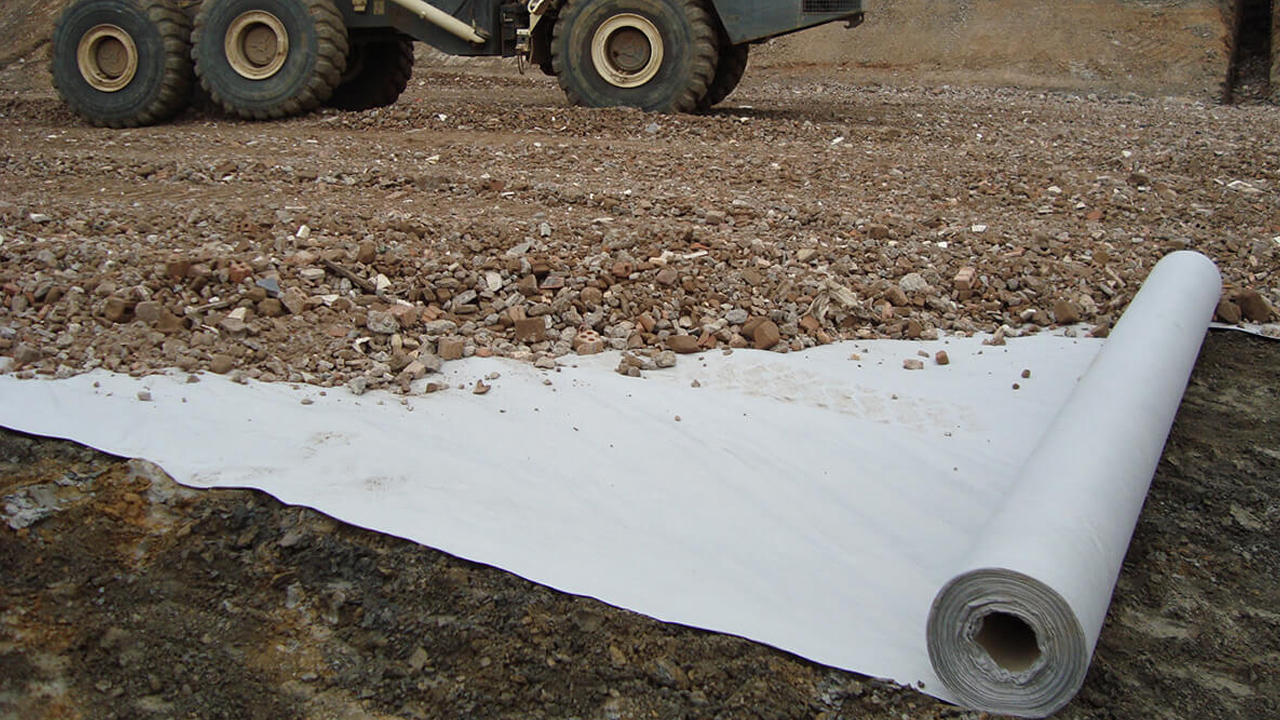
In areas prone to water saturation and shallow slope failures—a common challenge in Malaysia—installing a non woven geotextile reduces water build-up and helps maintain soil suction. Furthermore, when used in conjunction with a retaining wall, it protects other geosynthetic components and helps relieve hydrostatic pressure, ensuring the stability of the entire system.
Geotextile in Retaining Wall and Gabion Wall Construction: Integrating Gabion Mattress
The geotextile is fundamental to the structural integrity of both gravity and reinforced earth systems. For retaining wall structures built using the Geosynthetic Reinforced Soil (GRS) method, horizontal layers of geotextile are laid within the backfill, acting primarily as reinforcement to provide tensile strength to the soil mass. A non woven geotextile is also routinely placed behind the wall face to provide crucial filtration and drainage.
In gabion wall and riverbank protection projects, the geotextile fabric acts as a filter layer between the natural ground and the rock-filled cages. This prevents piping—the loss of fine soil particles through the gabion wall structure—which is essential for preventing the structure from subsiding. The same critical principle applies to hydraulic applications using a gabion mattress to line riverbeds for scour protection.
Specialized Geotextile Systems: Soil Nailing and Terramesh Wall Applications
Beyond conventional applications, geotextile products are integral to advanced stabilisation techniques. For Soil Nailing systems, a non woven geotextile is frequently used as a filter layer behind the shotcrete facing. This maintains drainage while separating the soil from the facing material, ensuring the system’s long-term effectiveness in stabilizing steep cuts.

Similarly, the Terramesh Wall system, a type of Mechanically Stabilized Earth (MSE) wall, relies on geogrids and geotextile fabric for internal reinforcement. The geotextile ensures separation and filtration within the reinforced soil block, contributing directly to the structural strength and design life of the system.
Sourcing the Right Geotextile Supplier: Quality Geotextile Fabric and Non Woven Geotextile
For any ground reinforcement project, procuring high-quality geosynthetics is non-negotiable. Project engineers across Malaysia must rely on reputable firms to act as the geotextile supplier. These professionals provide certified non woven geotextile and woven geotextile fabric materials and offer expert advice on product selection, ensuring the chosen material meets specific project requirements for durability in the challenging local climate conditions. Contact us for more!