

What Restaurants in Malaysia Must Know Before Installing a Water Dispenser and Water Filtration System
 admin on
 Water Quality Is a Business Decision for Malaysian Restaurants
Water touches almost every part of a restaurant’s operation. It goes into food, beverages, cleaning processes, and ice production. Customers may never think about it directly, but they experience its quality in every dish and drink served. For restaurant owners in Malaysia, choosing the right water dispenser and water filtration system is less about convenience and more about operational reliability, food safety, and the reputation that comes with consistently good results.
Getting this decision wrong tends to show up gradually — in equipment that wears out faster than expected, in water that affects beverage taste, or in hygiene issues that are difficult to trace back to their source. Getting it right from the start saves considerably more time and money than fixing problems after installation.
Getting this decision wrong tends to show up gradually. Equipment wears out faster than expected. Water quality starts affecting beverage taste in ways that are hard to pinpoint. Hygiene issues emerge without a clear source. Getting the system right from the start saves considerably more time and money than tracing and fixing problems after the fact.
Restaurant Water Demand Is Nothing Like Home or Office Use
A water dispenser designed for home or light office use will not hold up in a restaurant environment. The difference is not just volume. It is the nature of the demand. Restaurants draw water continuously across long operating hours, with usage spiking sharply during meal service and rarely dropping to the near-zero levels a home system gets to rest at overnight.
A water dispenser built for restaurant use needs to handle sustained load without compromising flow rate, temperature stability, or hygiene. Systems that struggle to keep up during peak hours create bottlenecks in food preparation and slow down service at exactly the moments when speed matters most. Selecting a system rated for commercial demand rather than adapting a residential unit is the more reliable long-term approach.

Why Commercial Water Filter Capacity Matters
Restaurants need a commercial water filter that matches actual daily consumption rather than one sized for average household use. A filtration system running beyond its rated capacity degrades water quality, increases maintenance frequency, and shortens the lifespan of both the filter and the equipment it supplies.
Sediment buildup in kitchen equipment is a common consequence of under-capacity filtration. Coffee machines, ice makers, steamers, and dishwashers all perform better and last longer when the water feeding them is consistently clean. Mapping out actual water usage before selecting a commercial water filter is a straightforward step that most restaurant operators skip, and one that tends to cost them more in the long run.
Outdoor Filtration as the First Line of Protection
Water entering a restaurant from the municipal supply or a private source is not always as clean as it appears at the point of entry. An outdoor water filter installed at the water entry point removes rust, debris, sand, and larger particles before they reach the main filtration system inside.
Without the best outdoor water filter Malaysia, those contaminants work their way into storage tanks, filtration components, and eventually kitchen equipment. Removing them at the entry point protects the entire downstream system, reduces indoor filter replacement frequency, and keeps water quality more consistent throughout the day.
Indoor and Under Sink Filtration for Kitchen and Service Areas
Once water has passed through outdoor filtration, it still needs further purification before reaching a water dispenser or food preparation point. An indoor water filter is easy to monitor and maintain, which suits kitchen environments where staff need to check and replace filters without specialist assistance.
An under sink water filter delivers the same purification result while keeping components out of the way in a working kitchen where bench space and floor space are always at a premium. Both approaches achieve the same outcome. Water that meets drinking and cooking standards consistently throughout service. The choice between them usually comes down to kitchen layout and how much accessible space is available near the installation point.
Hot and Cold Water Dispensers in a Restaurant Setting
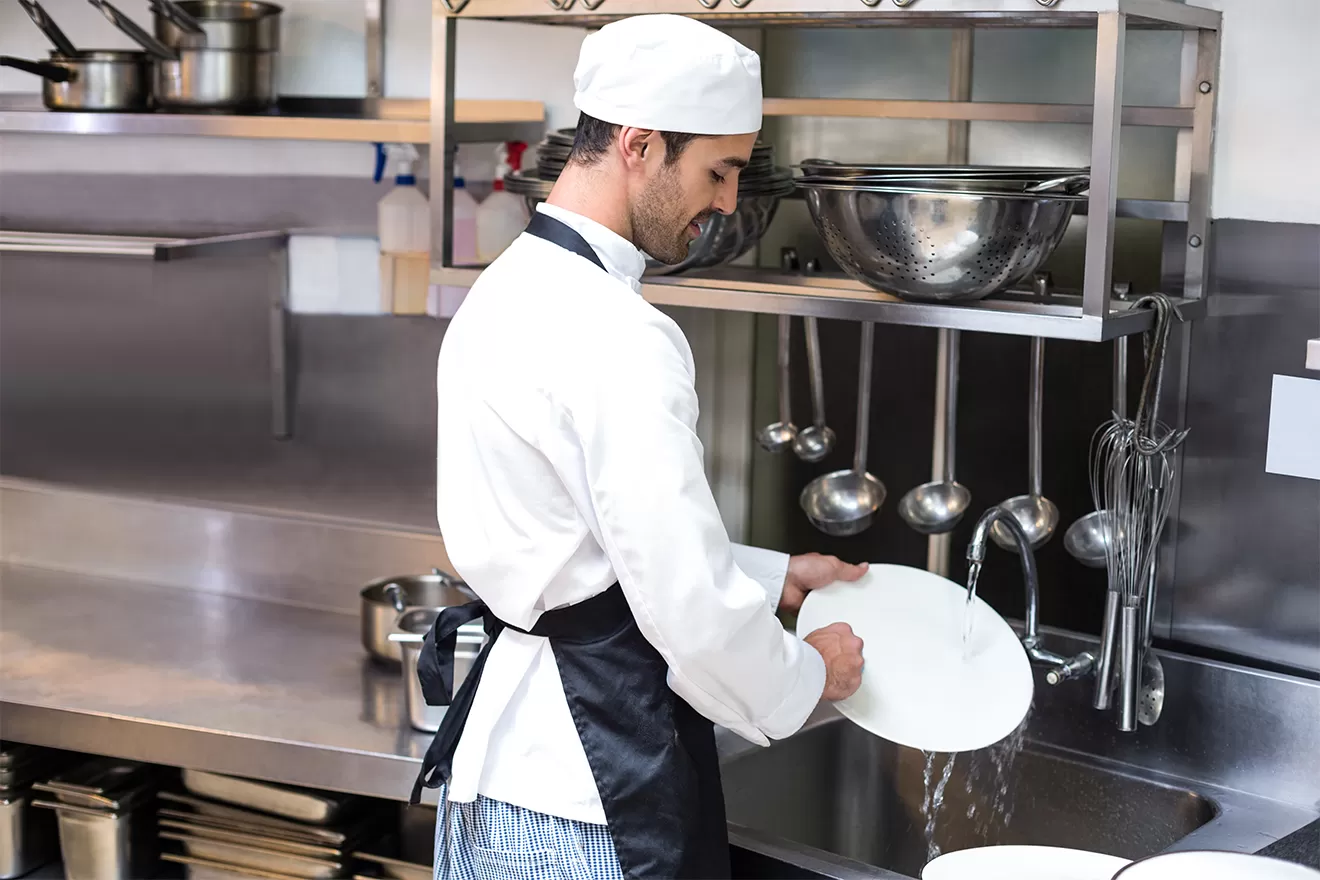
Instant access to hot and cold water changes how a kitchen operates. Hot water on demand speeds up beverage preparation and supports cleaning routines between service periods. Cold water keeps customer service moving during busy periods without requiring staff to leave the service area.
A hot and cold water dispenser Malaysia used in a restaurant environment needs to maintain temperature stability under continuous demand, integrate cleanly with the filtration system it draws from, and meet hygiene standards that prevent contamination between uses. Temperature consistency matters particularly for beverage quality, where water that is not hot enough affects extraction in coffee or tea and water that is not cold enough affects customer perception of drink freshness.
Halal Water Filter Requirements for Malaysian Restaurants
Halal compliance is a straightforward but important consideration for restaurants serving Malaysian customers. A halal water filter Malaysia ensures that the materials used in filtration and the treatment process itself meet halal certification requirements.
For many customers, the knowledge that water used in food and beverage preparation meets halal standards is part of the trust they place in an establishment. Restaurants that can demonstrate certified halal water filtration alongside other halal credentials strengthen that trust in a way that is difficult to achieve through other means. Certification also tends to indicate a higher level of product verification, which benefits water quality outcomes independently of the compliance dimension.
Rainwater Harvesting as a Supplementary Water Source
Some Malaysian restaurants are exploring rainwater harvesting as a way to reduce water costs and support sustainability goals. Harvested rainwater can work as a supplementary source for certain applications, but it requires proper treatment before it enters any food or beverage process.
A water filtration system from BACFREE Malaysia designed to handle rainwater input, combined with a commercial water filter rated for the volumes involved, is the minimum requirement for safe use in a restaurant context. Any restaurant considering rainwater integration should treat the filtration design as carefully as they would any other food safety system.
Building a Water System That Supports Long-Term Restaurant Operations
A water dispenser and water filtration system that works well for a restaurant is one that was selected with that specific environment in mind. Capacity, hygiene standards, maintenance requirements, halal compliance, and compatibility with the kitchen layout all factor into a decision that will affect daily operations for years.
Restaurants that approach this as a genuine infrastructure investment rather than a commodity purchase tend to get systems that perform reliably, require predictable maintenance, and support the food quality and customer experience the business depends on.
